
Searching for treatment abroad often turns up a confusing mix of hospital websites, agent phone numbers, and vague promises. Somewhere in that mix sits a role most patients don’t fully understand until they’re already deep into the process: the medical tourism facilitator.
So what exactly does a facilitator do, and why does working with one make such a difference? This guide breaks down the facilitator model from the ground up — what the role actually covers, how the process unfolds step by step, and what separates a genuinely useful facilitator from a middleman adding cost without adding value. If you’re a healthcare professional or agent curious about how this model works from the partnership side, we’ve covered that too.
On this page:
- Quick Answer: What Does a Facilitator Actually Do?
- The Problem Facilitators Solve
- Step-by-Step: How the Facilitator Process Works
- What a Good Facilitator Includes (and What They Shouldn’t Charge For)
- Facilitator vs. Booking Directly With a Hospital
- Red Flags: How to Spot an Unreliable Facilitator
- For Doctors and Agents: How Partnership Works
- Frequently Asked Questions
Quick Answer: What Does a Facilitator Actually Do?
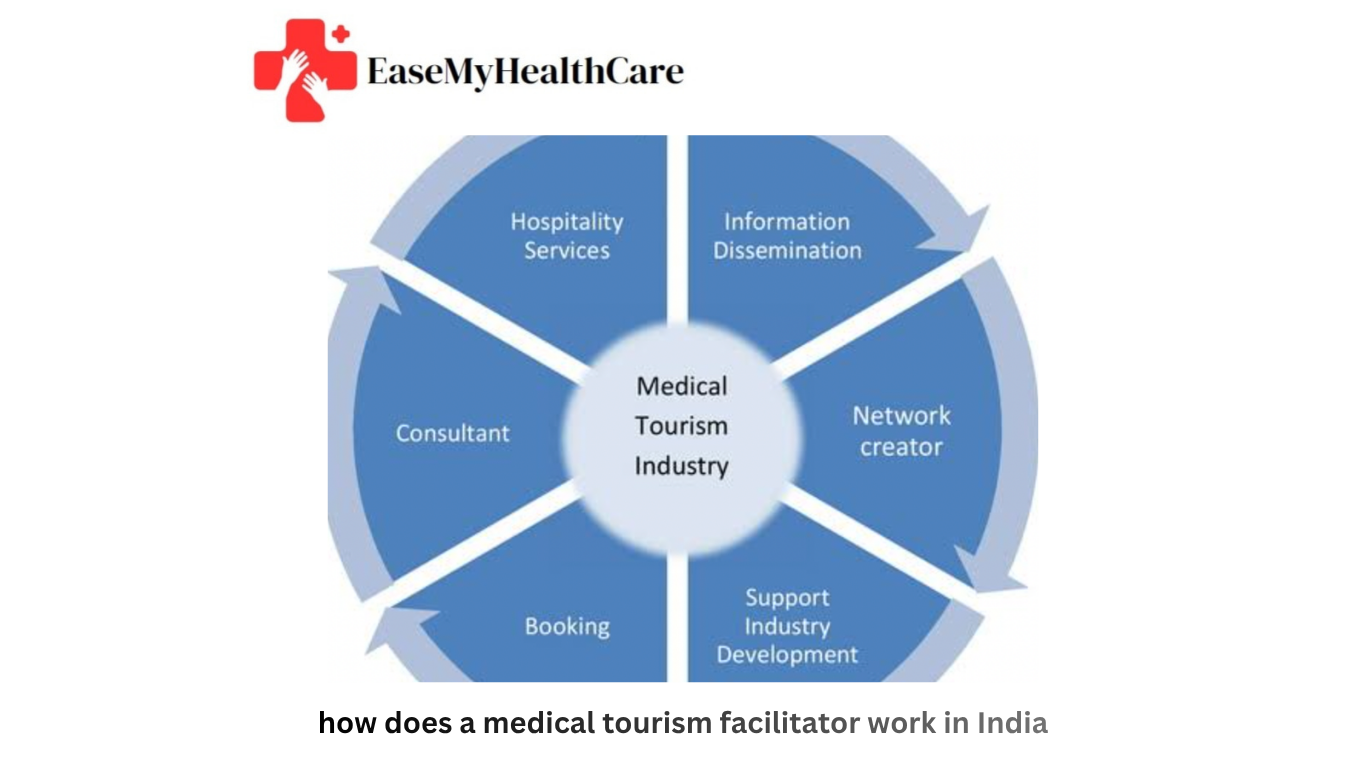
A medical tourism facilitator acts as the coordination layer between an international patient and the Indian healthcare system. Specifically, they connect your medical case with the right hospital and surgeon, negotiate transparent package pricing, arrange visa documentation, and manage logistics like airport pickup and accommodation. Beyond logistics, a good facilitator also acts as your advocate inside a healthcare system you don’t know, translating both language and process so nothing gets lost between your first enquiry and your flight home. EaseMyHealthcare handles every one of these steps as a single point of contact, so patients never have to coordinate hospitals, visas, and travel separately.
The Problem Facilitators Solve
Without a facilitator, a patient researching treatment in India faces a genuinely difficult task. Comparing hospitals requires evaluating accreditation, surgeon case volume, and pricing across dozens of unfamiliar options. Visa paperwork involves government processes that vary by country of origin. Logistics like airport transfers, accommodation, and local transport need arranging from thousands of miles away, often while managing anxiety about a serious diagnosis. A facilitator exists specifically to absorb this complexity, turning a fragmented, stressful process into a single coordinated journey.
Step-by-Step: How the Facilitator Process Works
- Initial case review: You share your medical reports, diagnosis, and treatment history. A qualified team reviews the case and identifies which hospitals and surgeons are the right fit.
- Treatment plan and quote: The facilitator coordinates directly with the hospital’s medical team to confirm a treatment plan, then delivers an itemized, all-inclusive quote covering surgery, hospital stay, and standard recovery care.
- Visa support: The facilitator arranges the hospital invitation letter required for your medical visa application and guides you through documentation for both you and any accompanying attendant.
- Travel and accommodation planning: Flights get booked (either by you or bundled in, depending on the package), and the facilitator arranges airport pickup and hotel accommodation near the hospital.
- On-the-ground coordination: Once you land, a case coordinator manages hospital check-in, interpreter support if needed, and stays available throughout your treatment for any questions or concerns.
- Treatment and recovery support: During your hospital stay and recovery period, the facilitator remains a point of contact for both you and the hospital, helping resolve any issues quickly.
- Post-treatment follow-up: After you return home, a good facilitator stays involved, coordinating tele-consultations with your treating hospital and helping manage any follow-up needs.
What a Good Facilitator Includes (and What They Shouldn’t Charge For)
Reputable facilitators typically earn their revenue through a commission arrangement with partner hospitals, meaning their coordination services come at no direct cost to you beyond the treatment price itself. Watch for this distinction carefully: your package price should be transparent and itemized, with facilitator compensation built into the hospital relationship, not added as a separate, unexplained fee on top of your treatment cost. If a facilitator can’t clearly explain how they’re compensated, that’s worth asking about directly before proceeding.
Facilitator vs. Booking Directly With a Hospital
You might wonder whether working with a facilitator costs more than approaching a hospital directly. In practice, it usually doesn’t, and it often works out cheaper. Facilitators send consistent patient volume to partner hospitals, which typically translates into negotiated package rates rather than standard walk-in pricing. Beyond cost, the real value lies in comparison and advocacy: a facilitator can compare multiple hospitals for your specific case, while approaching a single hospital directly means you’re only seeing that one option’s version of your treatment plan and price.
Red Flags: How to Spot an Unreliable Facilitator
Not every facilitator operates with the same standards, so a few warning signs are worth watching for. Be cautious of vague, verbal-only pricing instead of a detailed written quote. Pressure to commit quickly, without time for a proper video consultation with your actual surgeon, is another concerning sign. So is reluctance to name the specific hospital and surgeon before you pay anything, or an inability to verify their hospital partnerships independently through the hospital’s own NABH or JCI accreditation listing.
For Doctors and Agents: How Partnership Works
If you’re a doctor, clinic, or facilitator based abroad — particularly across the Gulf, wider Middle East, or French-speaking Africa — this same model works in reverse as a genuine business opportunity. Rather than competing with your existing patient relationships, EaseMyHealthcare operates as your India-side operations partner: hospital coordination, negotiated package rates, visa documentation, and ground logistics, while you retain the patient relationship you’ve already built.
Partnerships typically work through a straightforward commission-per-patient structure, paid after treatment completion, with terms formalized through a referral agreement covering commission rates, payment timelines, and confidentiality. If you’re already fielding enquiries from patients considering treatment abroad and want a reliable India-side partner to handle the rest, reach out to discuss partnership terms — we’re actively building relationships with agents and referring physicians across our core markets.
Frequently Asked Questions
Does using a medical tourism facilitator cost more than booking directly with a hospital?
Usually not. Facilitators typically earn commission through hospital partnerships, and their negotiated package rates often work out similar to or cheaper than standard direct pricing.
What exactly does a facilitator handle that I couldn’t do myself?
A facilitator compares hospitals and surgeons for your specific case, negotiates transparent pricing, manages visa documentation, and coordinates logistics like airport pickup and accommodation, saving significant time and reducing the risk of costly missteps.
How do I know if a facilitator is trustworthy?
Look for a detailed written quote, willingness to name the specific hospital and surgeon before payment, and verifiable hospital partnerships through official NABH or JCI accreditation listings.
Can I speak with the hospital or surgeon directly, or only through the facilitator?
With a reputable facilitator, yes. A video consultation directly with your surgeon before committing should be a standard part of the process, not something you have to request repeatedly.
How do doctors or agents abroad start a partnership with a facilitator in India?
Typically through a direct conversation about your patient volume and target markets, followed by a formal referral agreement covering commission structure and payment terms once a working relationship is established.
What happens if something goes wrong during treatment?
A good facilitator stays actively involved throughout your hospital stay, acting as your advocate to help resolve issues quickly, rather than disappearing once the booking is confirmed.
Work With a Facilitator Who Handles Everything
Whether you’re a patient planning treatment or a doctor exploring a referral partnership, EaseMyHealthcare handles the coordination so you don’t have to navigate it alone.